
The ultimate app for kettlebells practices! Whether you are a seasoned athlete or just starting out, powerBell offers a wide range of kettlebells workouts and exercises that are designed to help you improve your strength, endurance, and overall fitness.
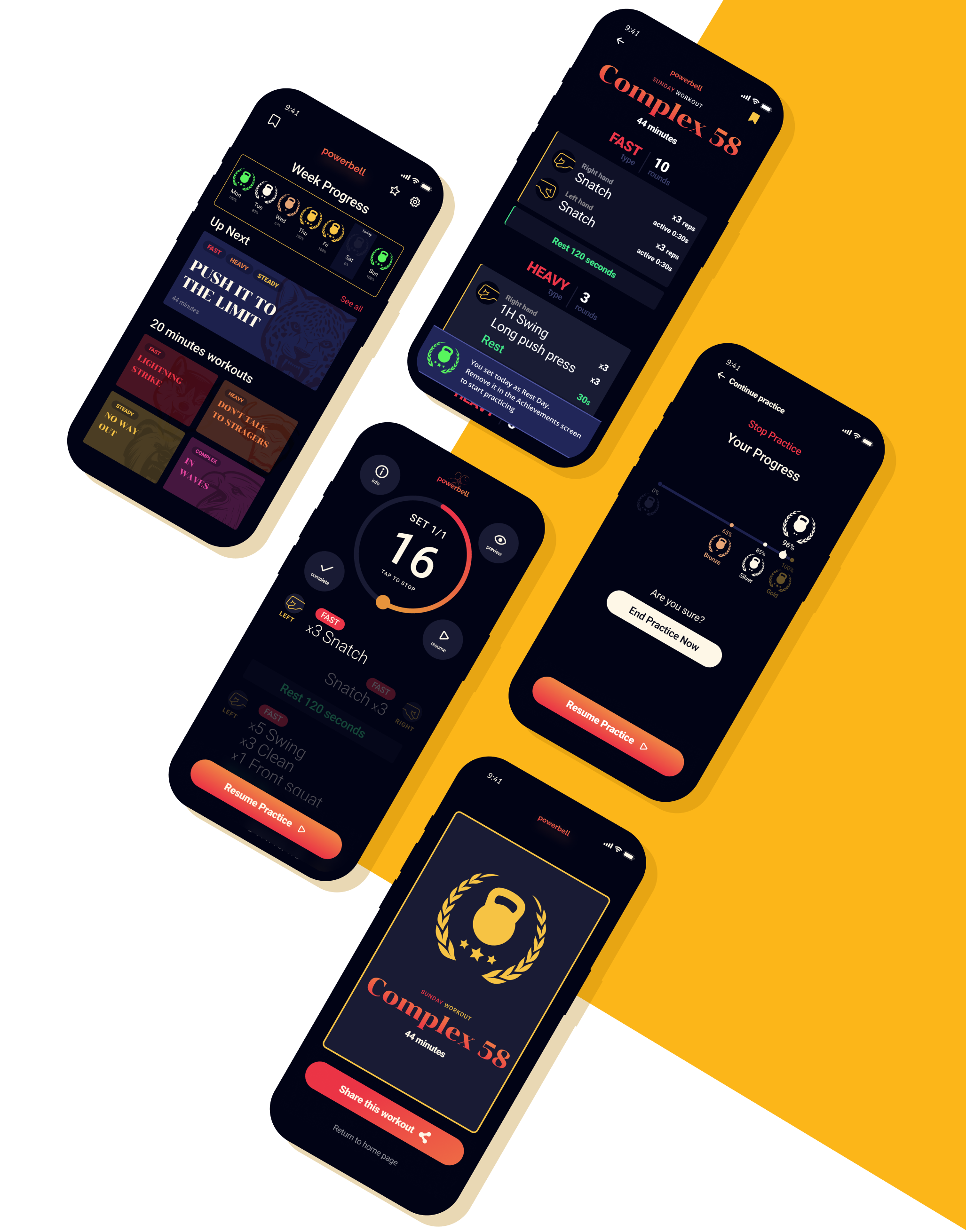
The powerBell App helps you to practices kettlebell exercises for great results built by tiny steps using a timer for every workout, avoid soreness and promote a continuous daily practice.

The powerBell App is designed to help users effectively practice kettlebell workouts through step-by-step timed instructions. The workouts are structured in a way that allows users to progress gradually, avoiding soreness and promoting daily practice. The app aims to give users the guidance and tools they need to achieve their fitness goals through kettlebell workouts.
3 months
Wireframes, Prototyping, Solution sketching, UX and UI Design
UI Designer, Mobile Developer
Figma, React Native

The problem we faced as the creators of the powerBell App was that we needed a way to keep track of our kettlebell workouts and to know which exercises to do. We initially used a timer app to time our workouts but found that we needed more guidance on which exercises to perform. This led us to develop the powerBell App, which provides step-by-step instructions and a timer for each exercise to help users effectively practice kettlebell workouts and achieve their fitness goals.

The goal of the powerBell App project was to provide a tool for myself and others to effectively practice kettlebell workouts and achieve their fitness goals. By offering step-by-step instructions and a timer for each exercise, the app aims to make it easier for users to track progress through their workouts, avoiding soreness and promoting daily practice.

My role in the powerBell App project was to create all of the visuals for the app. As the UI designer, I was responsible for ensuring that the app was visually appealing and easy to use for users.
As the creators of the powerBell App, my partner and I conducted user research based on our own needs to develop the app. We identified the problem that we faced when trying to keep track of our kettlebell workouts and decided to create an app that would provide the guidance and tools that we needed. We then used our own experiences and preferences to inform the design and features of the app, ensuring that it met the needs of users like ourselves.
These pain points were key factors in the development of the Powerbell app, as we aimed to address these issues and provide a solution for ourselves and other users:

A user persona is based on real user characteristics, behaviors, and goals. User personas help designers understand their target public's needs and motivations.
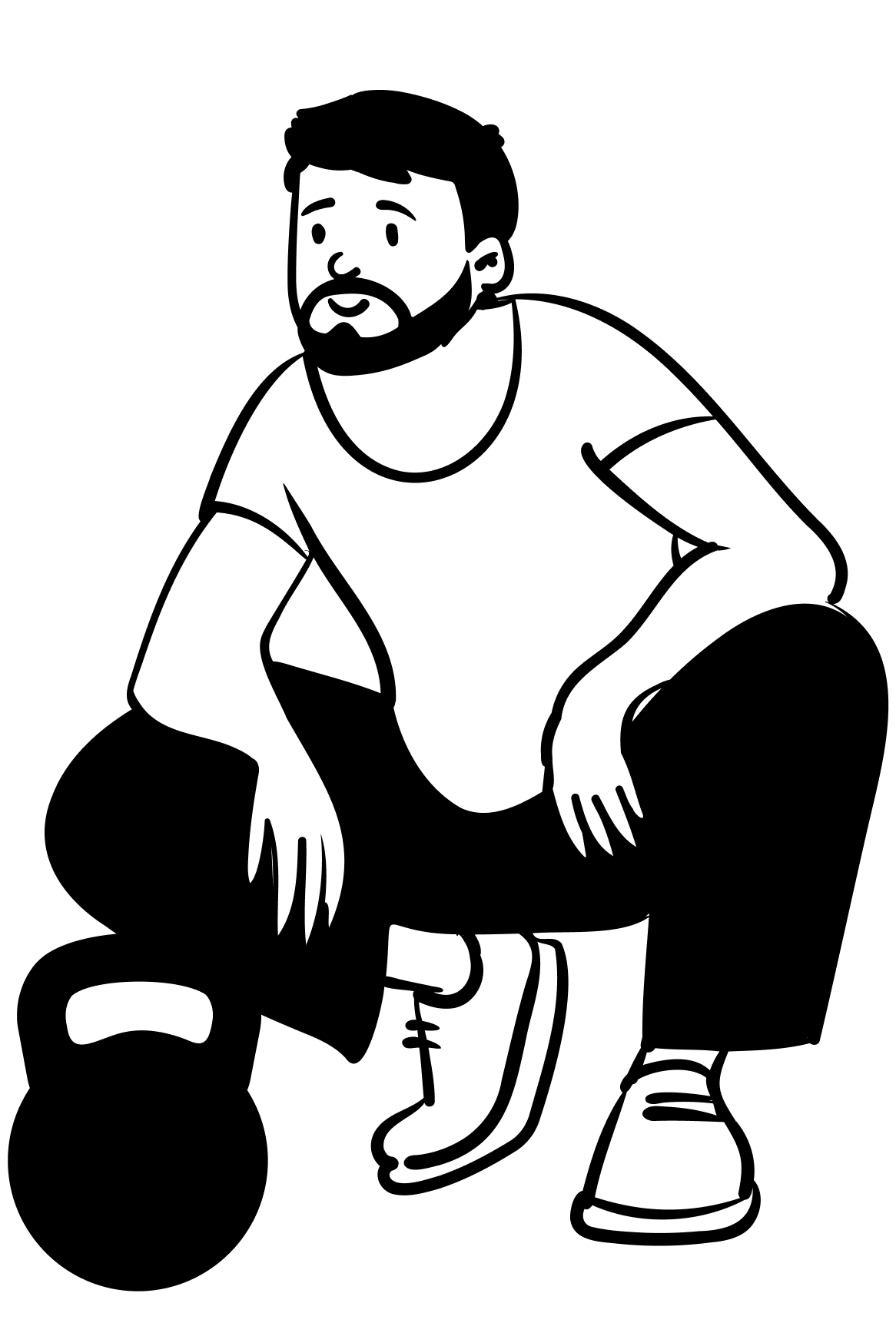

Ricci as a senior web developer, have a demanding job that often leave him feeling drained and short on time. He is always looking for new ways to mix up his workouts and try new things, but he struggled to know which exercises to do and how to perform them properly.
Wasting time figuring out what execise to do next.
He wants to keep track of his workouts.
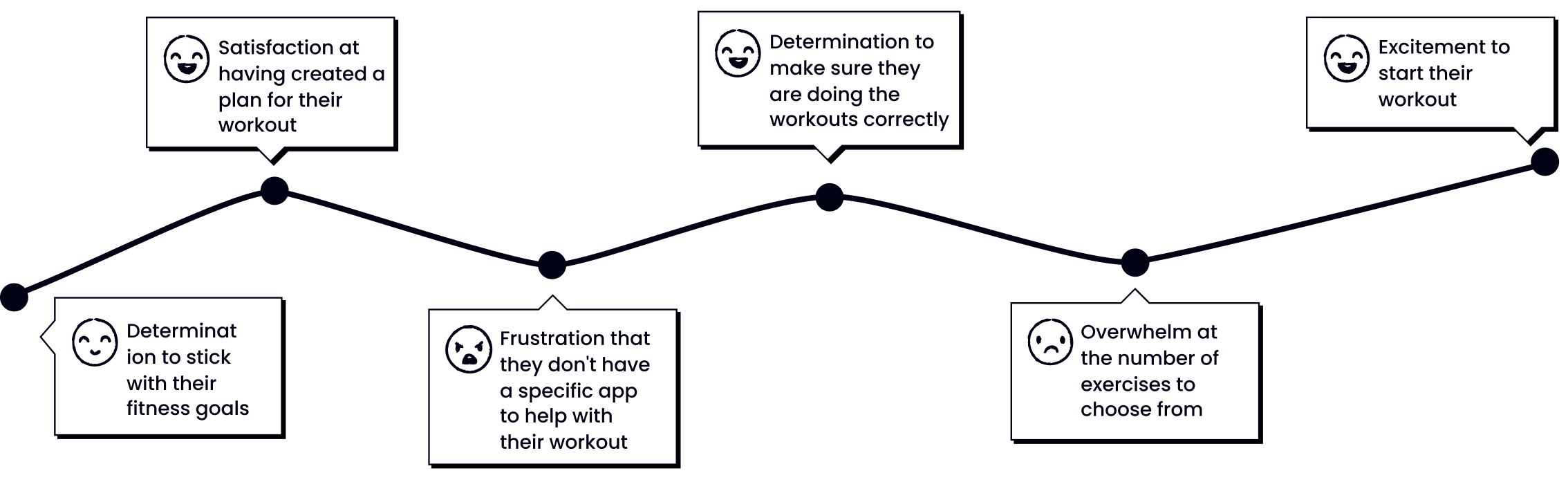
This user journey map illustrates the frustration and time consumption that can come with trying to do a kettlebell workout without an app to assist with exercise selection and timing.




The user defines their goal of doing a kettlebell workout.
The user decides they want to use a basic timer app and pen and paper to plan their workout.
The user searches online for lists of kettlebell exercises and instructions on how to properly perform them.
The user reads through various exercises and selects the ones they want to include in their workout.
The user creates a list of exercises and a rough plan for their workout using pen and paper.
The user sets the timer app for the desired duration of each exercise.
The user starts their workout, following the instructions and timing provided by their pen and paper plan and timer app.
The user finishes their workout, feeling satisfied with their progress but also possibly feeling a bit tired from the extra effort of planning and timing everything themselves.
"I really want to do a kettlebell workout, but I don't have a specific app to help me choose exercises and set a timer. I'll have to come up with a plan myself."
"I'll have to use a basic timer app and write down my plan on paper. It'll be a little more work, but I'm determined to stick with my fitness goals."
"There are so many different kettlebell exercises to choose from! How do I know which ones are right for me?"
"I'll need to be careful to select exercises that are appropriate for my fitness level and goals."
"Okay, I've selected the exercises I want to do and written them down. Now I just need to figure out how long to spend on each one."
"Setting the timer for each exercise is going to be a little extra work, but it'll be worth it to make sure I'm doing the workouts correctly."
"Okay, here we go! Time to get moving and start my workout."
"This is a little more work than using a specific app, but I'm still enjoying the workout and feeling good about my progress."
Time-saving: The app can streamline the process of choosing exercises and setting a timer, saving users time and effort.
Increased motivation: The app can offer a variety of workouts and progress tracking features, helping users stay motivated and motivated to continue their fitness journey.
Simplified planning: Users won't have to spend time researching and deciding on exercises or manually setting a timer, making it easier for them to fit a workout into their schedule.
Increased convenience: With the app on their phone, users can easily access their workouts and track their progress anytime, anywhere.
This UX/UI solution aims to make it easy for users to find, customize, and complete kettlebell workouts, with features that help them track their progress and stay motivated.
When sketching the low fidelity wireframe for the powerBell App, I was focusing on the overall layout and structure of the app, rather than the specific design details. This allows to quickly prototype and test different ideas, and get feedback from users or stakeholders before moving on to higher fidelity designs.
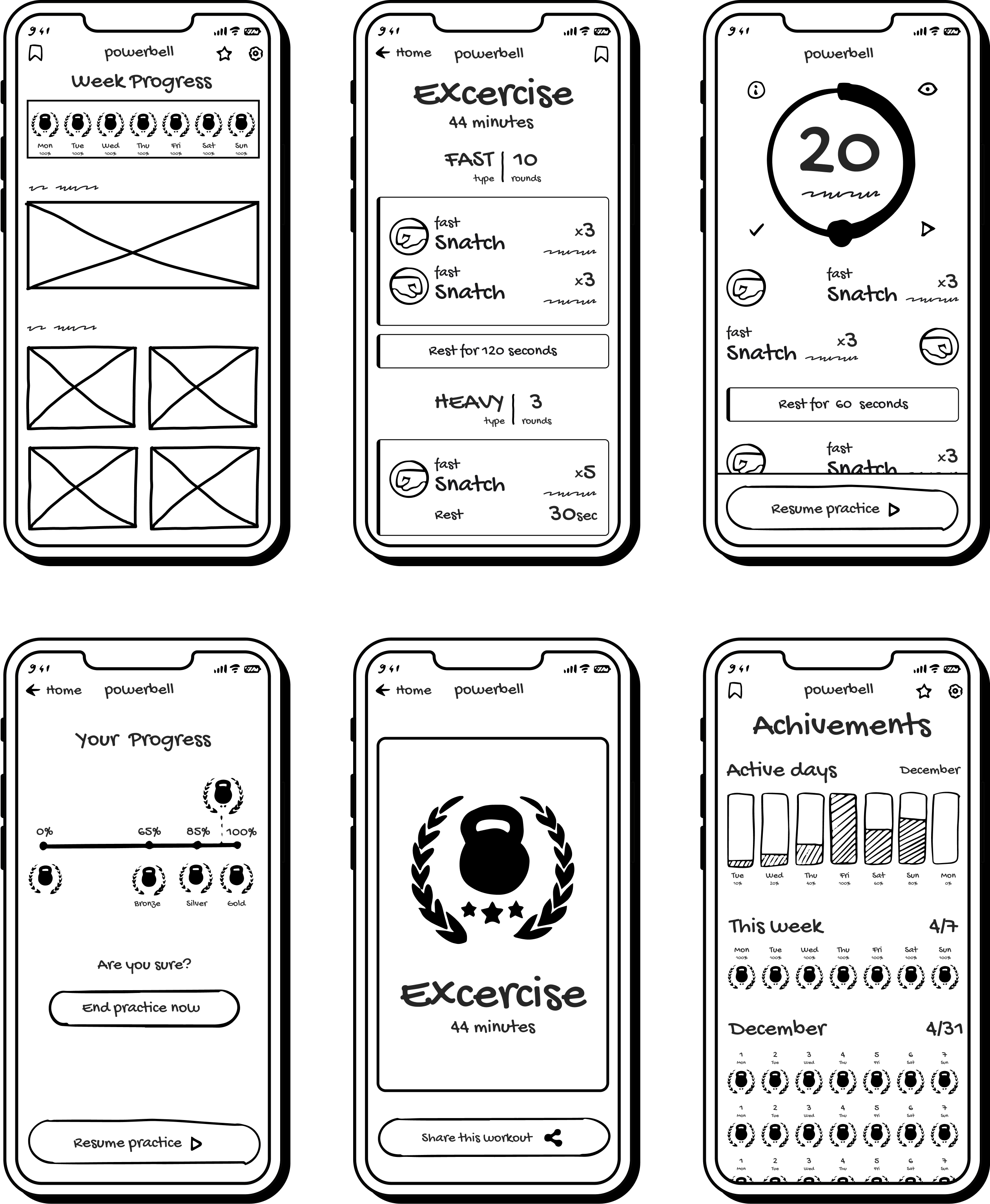
Creating a high-fidelity prototype based on a low-fidelity prototype is a really exciting and rewarding process! It allows us to take the rough ideas and concepts from our low-fidelity wireframes and bring them to life with more detailed design elements focusing on accessibility and usability.
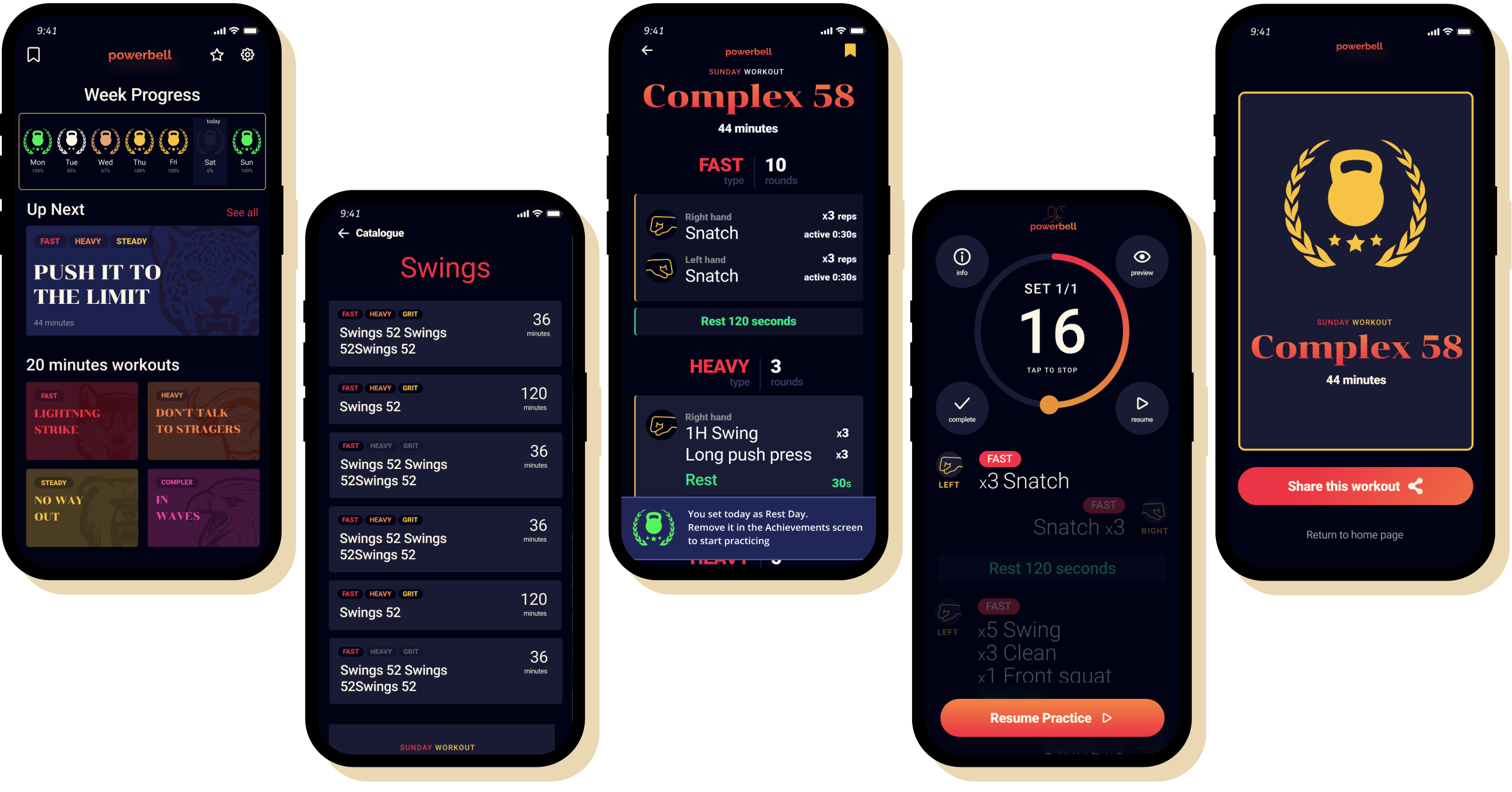
Overall, the PowerBell app is a well-designed tool for practicing kettlebell workouts and achieving fitness goals. The step-by-step instructions and timer are easy to use and make it convenient for users to track their progress through their workouts. The app is visually appealing and has a clean, intuitive interface.

While there is room for improvement, the app's clear instructions and convenient timer make it a valuable resource for anyone looking to do kettlebell workouts.
In conclusion, the PowerBell app is a valuable resource for anyone looking to practice kettlebell workouts and improve their fitness. Its clear instructions and convenient timer make it easy to track progress and stay motivated, and the app has a visually appealing design and a clean, intuitive interface.
Competition: There may be other apps on the market that offer similar features for practicing kettlebell workouts, making it difficult for the PowerBell app to stand out and attract users.
Limited appeal: Kettlebell workouts may not be for everyone, meaning that the app's target audience may be somewhat limited.
Keeping users engaged: The app may struggle to keep users engaged and motivated over time, especially if they do not see the results they are hoping for or if they become bored with the available workouts.
Adding new features: The app could consider adding new features, such as the ability to create custom workouts or track progress over time, in order to keep users engaged and motivated.
Improving user engagement: The app could consider implementing features that encourage social interaction or competition, such as a leaderboard or the ability to share workouts with friends, in order to keep users motivated and engaged.
Promoting the app: The app could consider implementing a marketing campaign or partnering with fitness influencers in order to increase awareness and attract new users.